
Restoring a Lost Bield at Moss Peteral Farm, Hadrian’s Wall

A Field Walling Case Study in
Brampton, Cumbria
Introduction
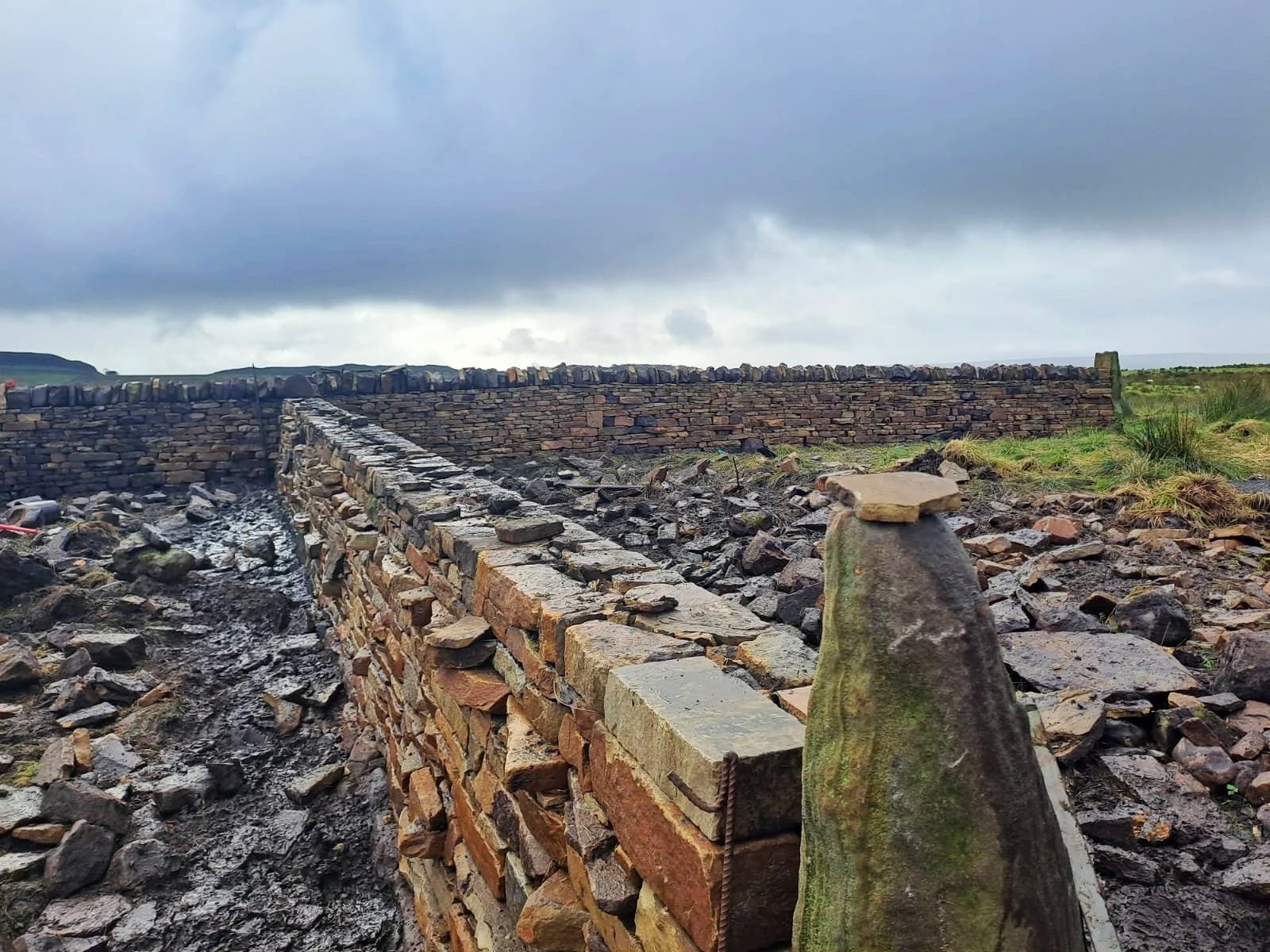
When Sue Seymour from Moss Peteral Farm got in touch, she had a specific and unusual request: could I rebuild a bield, a traditional stone shelter wall, that had all but disappeared from the landscape? All that remained above ground were five stone stoops, two of which I had to mechanically winch back upright before I could even begin.
What is a bield?
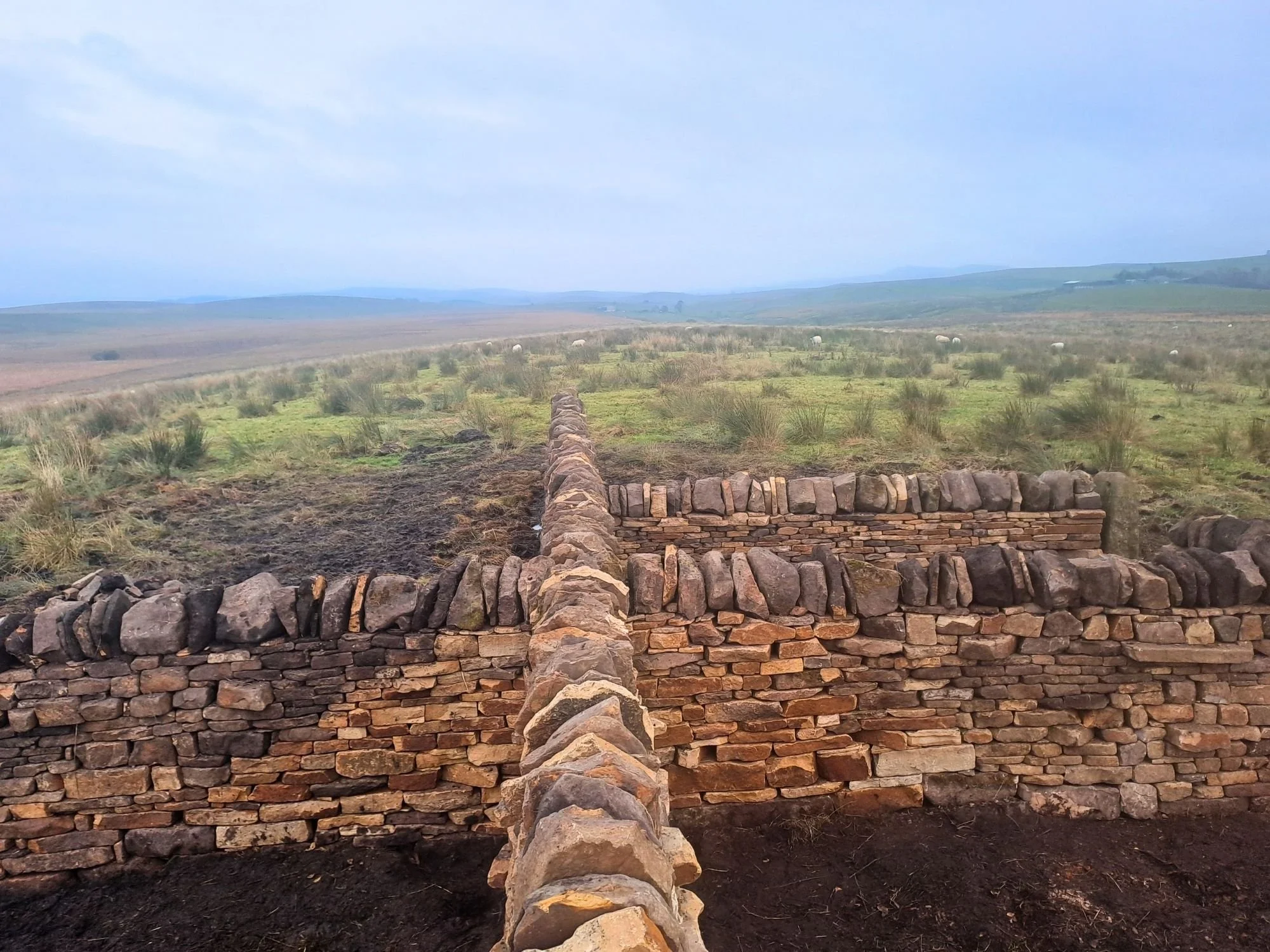
Bields are shelter walls you find throughout the Hadrian's Wall area, built without acting as a boundary. They come in a range of shapes, circular, rectangular, L-shaped, propeller, or cross-shaped, and this one was a cross design with a small square holding pen. Built well, a bield gives livestock 360-degree protection from the wind, whichever direction it's blowing from.
The Challenge
Most of the original bield walling stone had been buried or taken away, possibly years earlier. My main challenge was getting new stone to the site at all, across ground that was upland, steep and difficult to access. I brought a local contractor in to bring stone up by tractor and trailer, and used a small digger to uncover what remained of the original structure and prepare the ground for building.
The Build
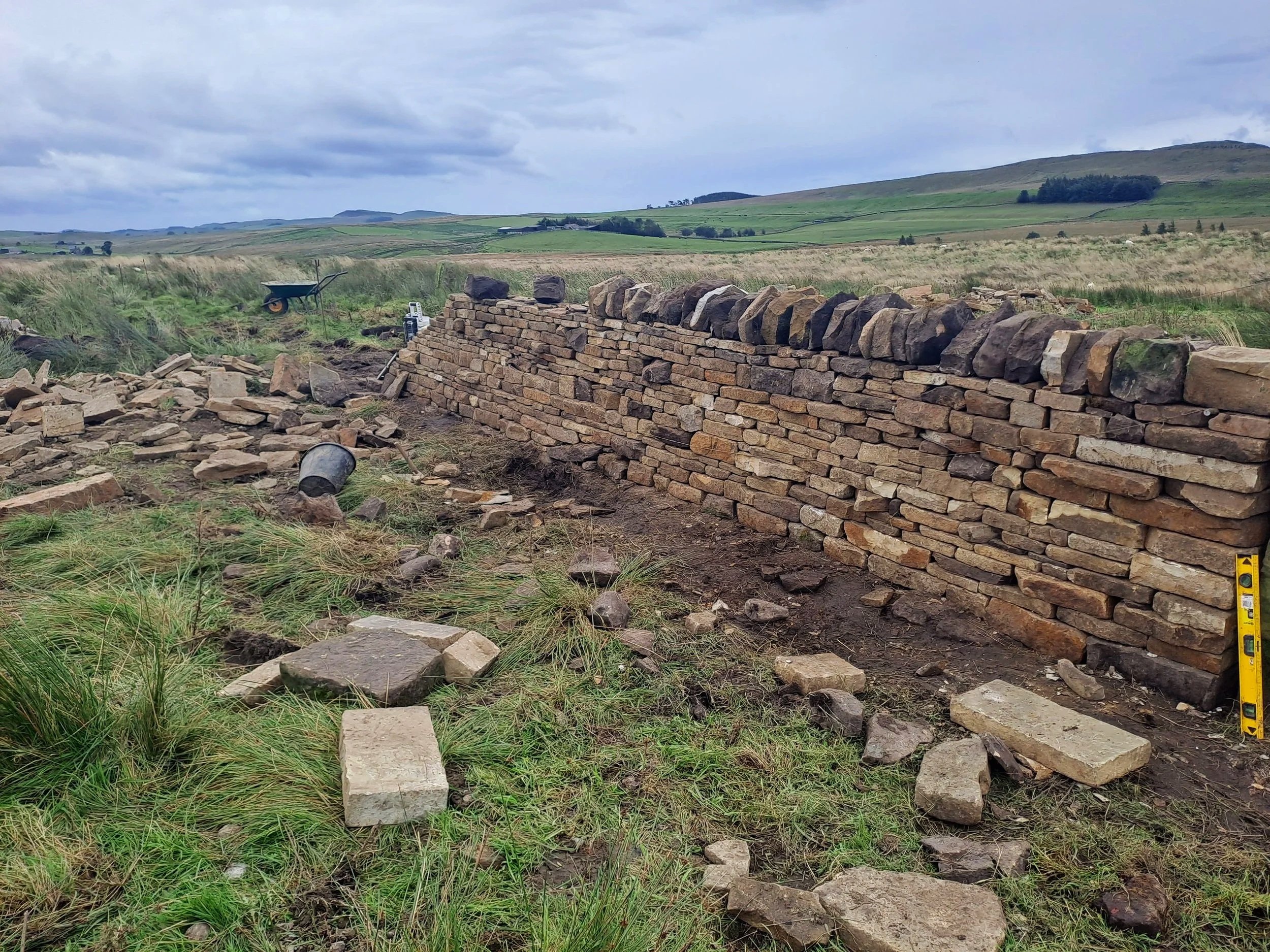
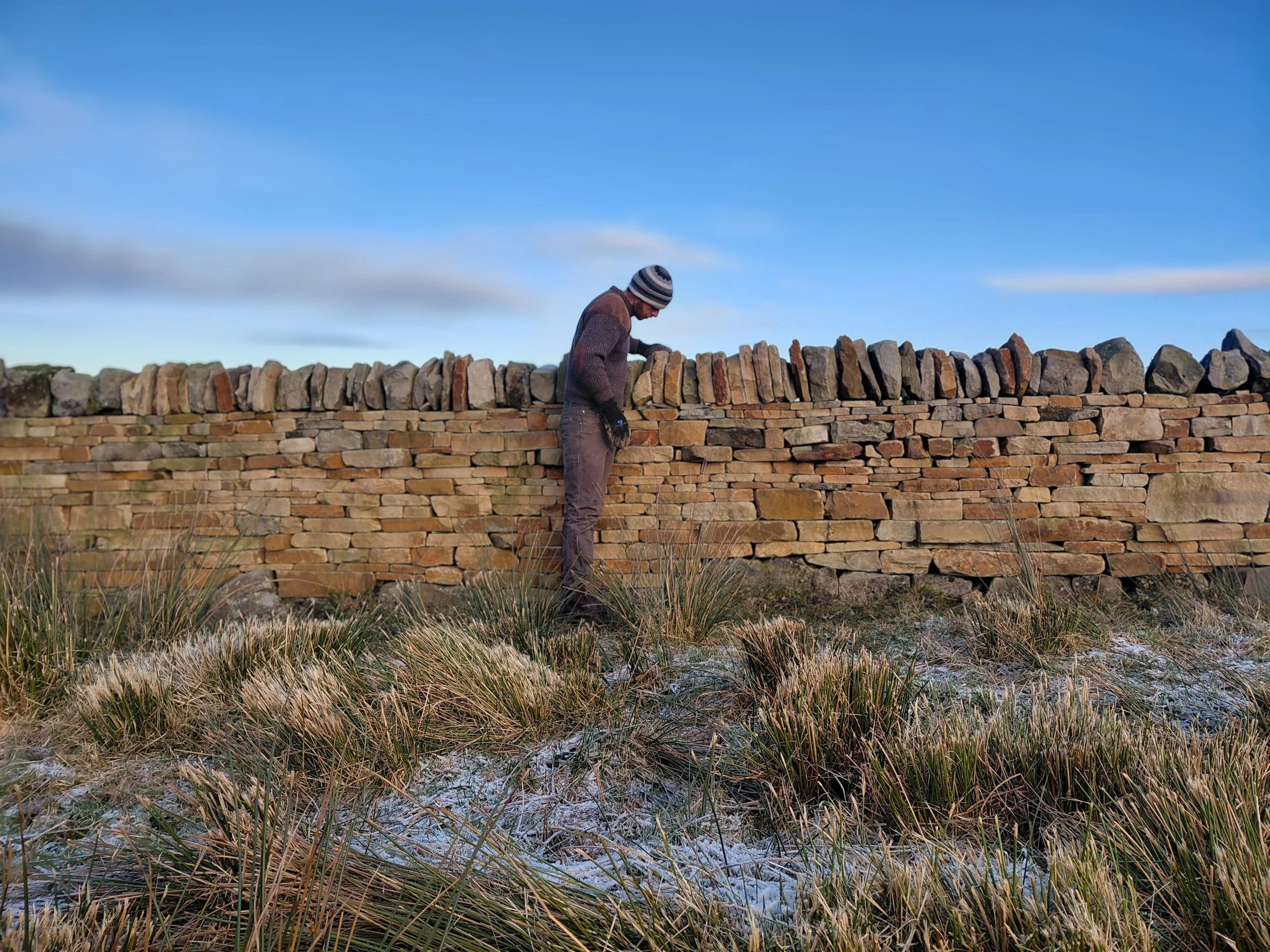
I built the wall using the same traditional dry stone methods I always use: batter frames to keep the angle correct, string lines to guide level, even coursing, through-stones for strength, and coping stones to finish the top and lock the structure in place.
The Numbers
This bield restoration involved rebuilding 73 metres of walling to a height of 1.3 metres, using 60 tonnes of quarried stone from Alston Natural Stone. The project took 21 days to complete.
Client Feedback
"Ben has worked on both regular boundary walls and heritage features on my farm. His work is always appropriate to the task in hand... The care and craftsmanship he employed in a restoration project has created something quite beautiful, yet still functional.“
The Outcome
I was really pleased with how it turned out. It struck a good balance between strong structural integrity and a finish that looks right in the landscape, and it'll be used as a feature point on farm tours as well as a practical shelter for years to come. Bringing a heritage feature like this back to its former glory was one of the most rewarding projects I've worked on, especially knowing it probably hadn't existed in living memory before now.
