
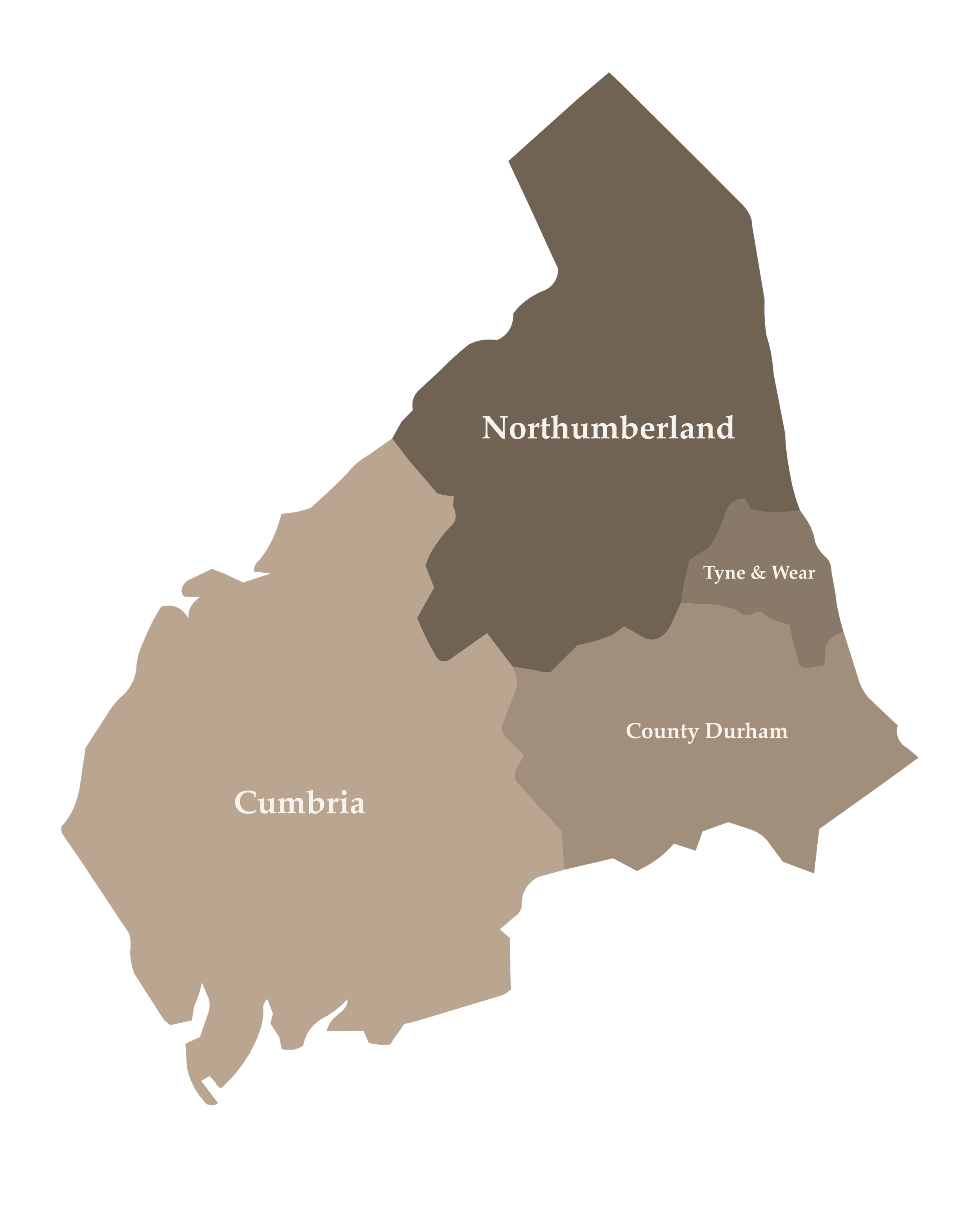
Areas Covered
Situated in the North East, with deep ties to Northumberland, Cumbria, Tyne & Wear and County Durham, particularly the farming communities and agricultural land. While this is where most of Ben’s work takes place, if you are unsure whether your project is feasible geographically, feel free to get in touch.
Geographical Significance
Northumberland
Northumberland's uplands have long favoured stone boundaries over hedges, shaped by exposed, often treeless terrain and a ready supply of local stone. Much of Ben's work sits within this landscape, including areas along Hadrian's Wall, where dry stone walling has marked field boundaries for centuries.
Tyne & Wear
Once more industrial and urban in character, Tyne & Wear's outer, more rural edges still carry the same stone wall traditions as neighbouring Northumberland, particularly where farmland borders the county line.
County Durham
County Durham's landscape shifts from the Pennine uplands in the west, where stone walling has deep roots, to gentler lowland farmland further east, where hedgerows became more common as the terrain flattened.
Cumbria
Cumbria's landscape, particularly around the Lake District and its fells, has one of the longest traditions of dry stone walling in England, built to withstand steep, exposed ground where hedging was rarely practical. The county's stone varies by region, from slate in the west to limestone further south.